
Share More Than Hello
Help more people discover More than Hello and inspire others to support the campaign.
Share the campaign →
Building Confidence, Independence and New Possibilities Through Horse Riding
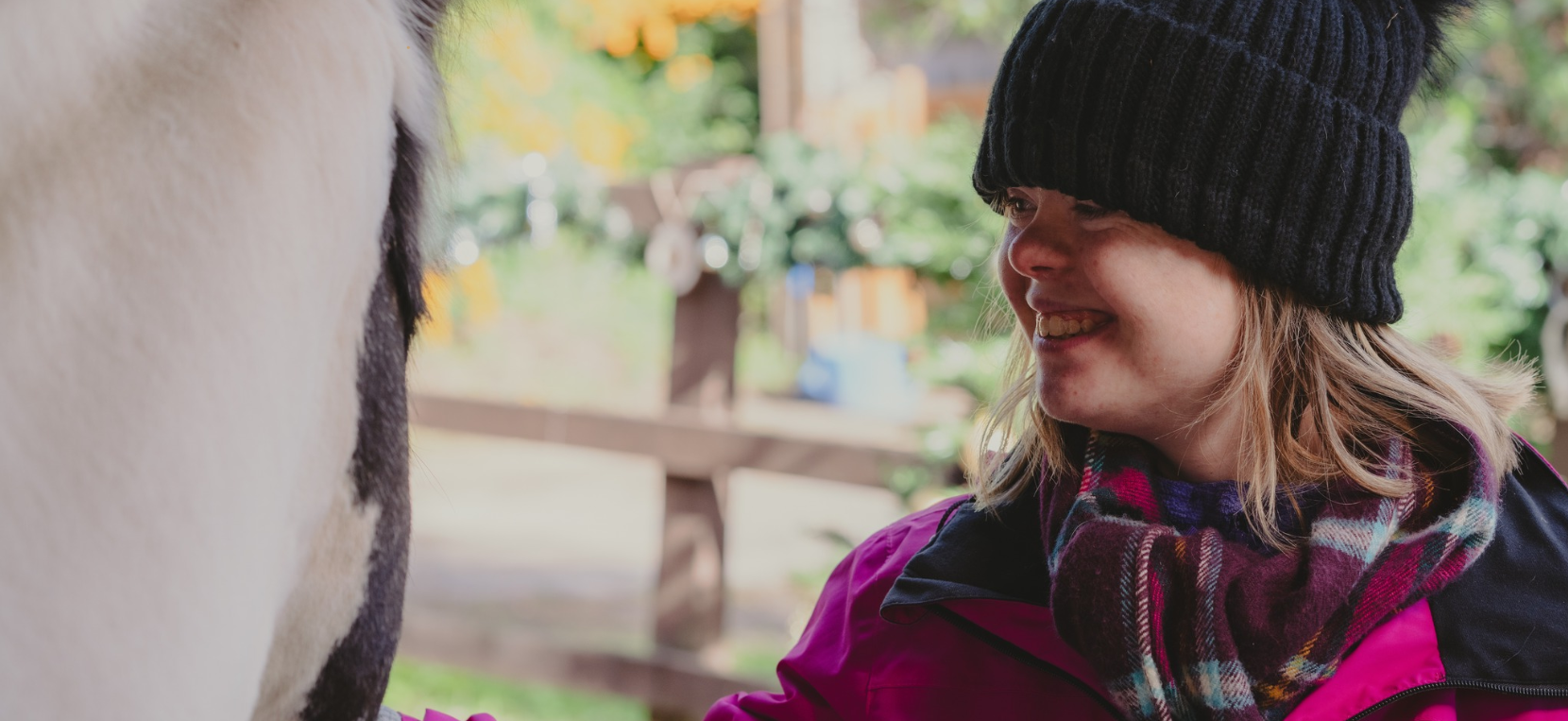
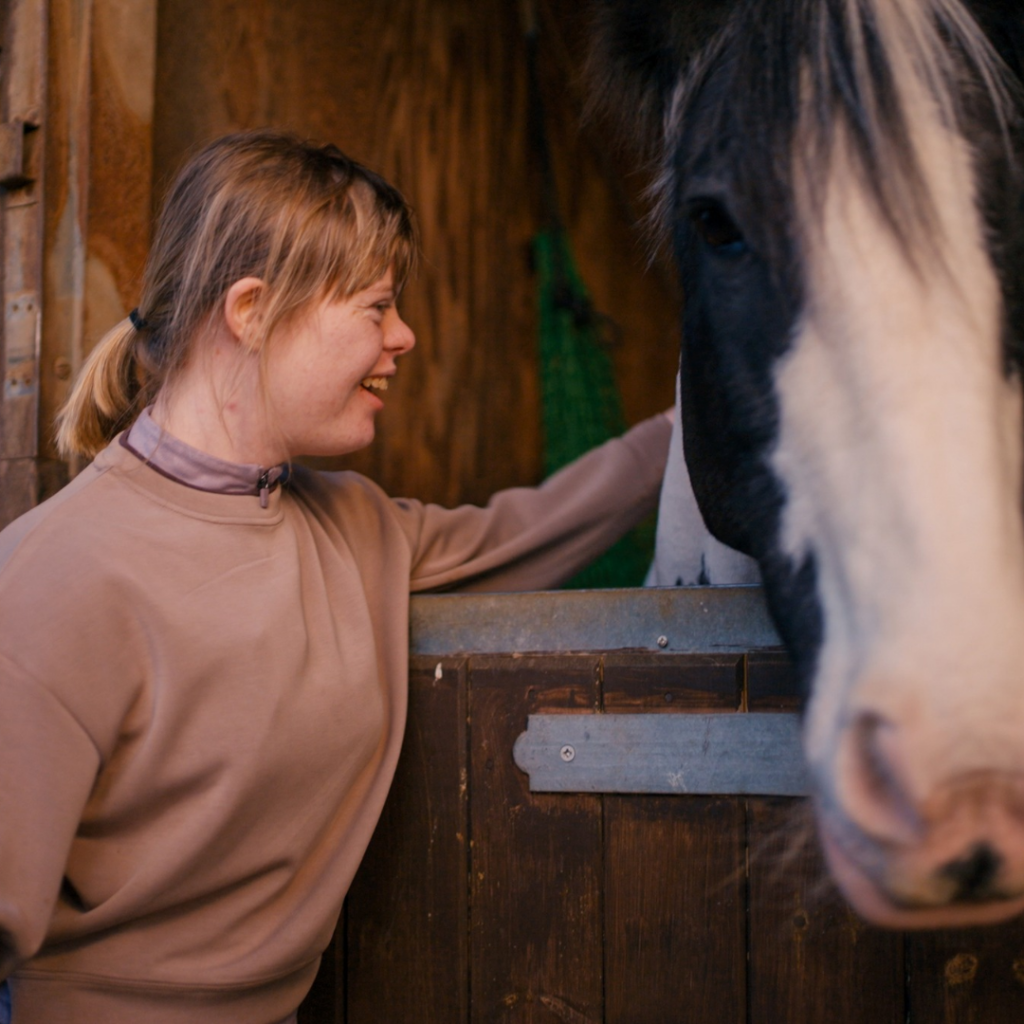
The grin on 18-year-old Maddy’s face when she’s with the piebald pony called Aimee says it all – RDA is her happy place where she feels most relaxed, most at ease with herself and the world, say her parents.
Maddy was born with Down’s syndrome and first met the RDA ponies when she was 4 years old. Rachel and Duncan Hill-Brown, Maddy’s parents, have long associations with horses, having ridden most of their lives, so introducing their daughter to ponies was a natural step.
“We knew that horses are lovely to be around, and realised that through the RDA, Maddy would be able to do something that she probably wouldn’t have been able to do otherwise,” says Rachel. “It was also something that we had all enjoyed previously, so why shouldn’t she enjoy it too?”
Initially, going to the RDA stables at Lowlands Farm was a real social occasion for Maddy, as she chatted as much to those who were leading and side-walking as actually engaging with a pony. Lowlands is the RDA’s National Training Centre, and Maddy and her parents live less than 20 minutes away.
The COVID-19 pandemic lockdowns put a hold on Maddy’s pony riding, but having returned to Lowlands in 2022 she has now moved forwards from sitting on the back of a horse to actively riding and competing.
“Gail, the RDA coach, saw that the now 14-year-old Maddy had the capacity to be riding independently,” says Rachel.
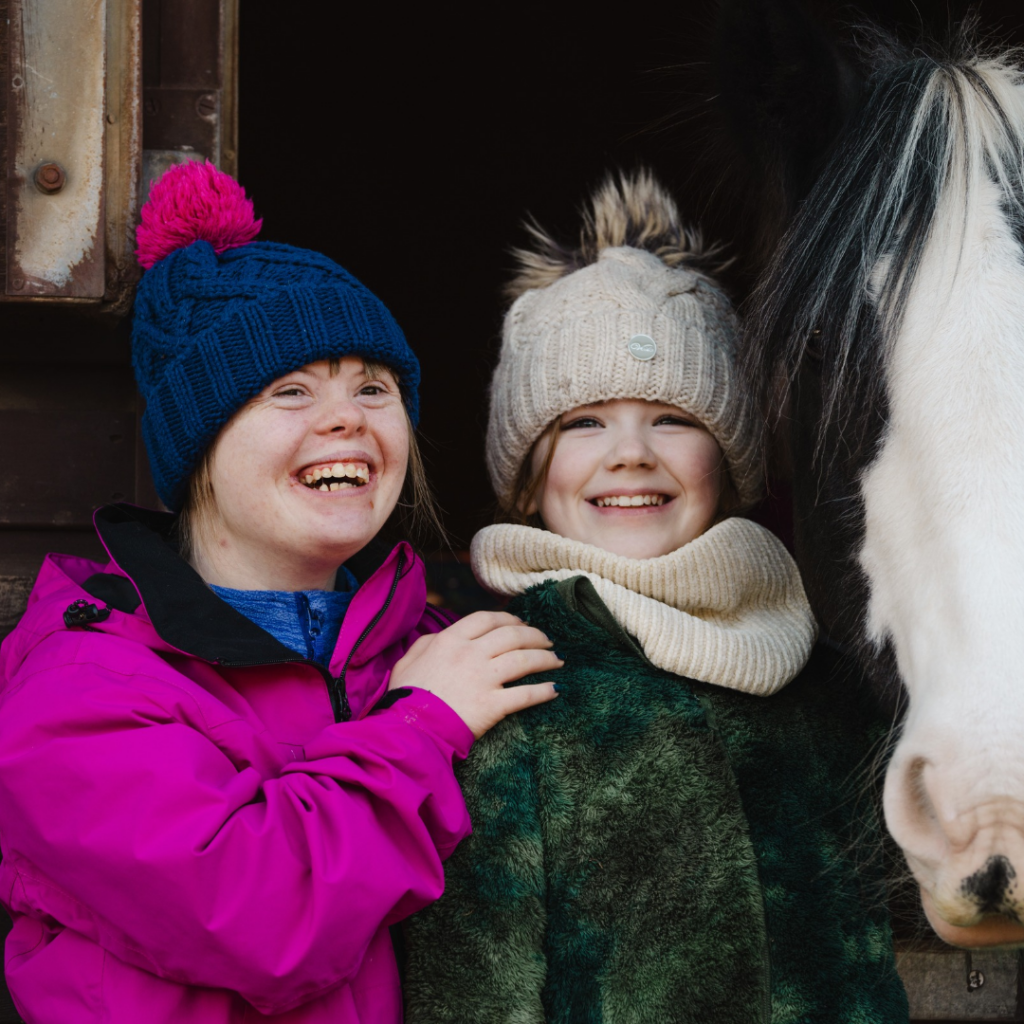
With time and patience, over many months, Maddy went from sitting on a horse to cantering independently and doing jumping and dressage
“None of us believed that was possible in terms of her independence,” says Duncan. “To get a horse to canter or to navigate jumps or a dressage course requires many skills: Anticipating, thinking ahead and communicating with the animal at the same time as responding to what the animal is doing, whether it’s stopping suddenly, stretching a leg, or dealing with a scratch.” By 2024, Maddy was ready to take part in her first local competition, and qualified for the RDA National Championships.
“That was just so confidence building for Maddy,” says Rachel. “She had an absolute ball because she was given the ability to achieve it in her own right and to participate in an open class.” However, in contrast to Maddy’s positive relationship with RDA, her experience in mainstream education was more challenging, as she had to fight to hold her own. Maddy’s secondary school was a small rural place in Henley, which uniquely had its own equestrian team.
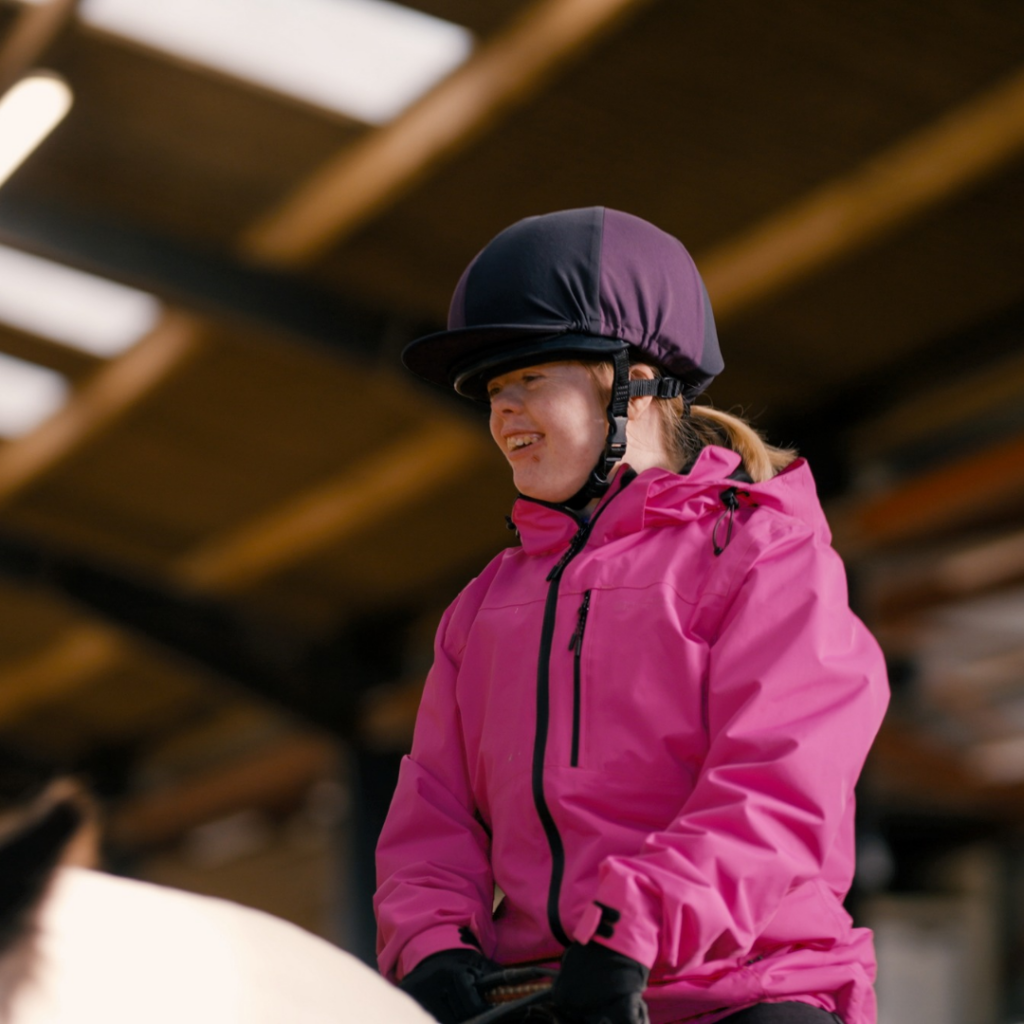
Both Rachel and Duncan emphasise that none of this comes easily and takes loads of patience and perseverance from parents as well as the children. “I think there’s a danger of assuming that because something isn’t happening as quickly as you would expect it to in our fast-moving world, that it’s not going to happen,” says Rachel. “But, given that little bit of extra time and patience, it so often can, and children can achieve what they’re capable of doing.” Duncan adds that sticking with it lets children fulfil their potential, whatever that might be and whatever that might look like: “But you do need to give it time for that to happen, because it doesn’t happen overnight.”
In practical terms, Rachel and Duncan describe having to stand around on the coldest days, even in the indoor school, because Maddy still needs her parents to go with her: “We go with her because that’s what she needs,” says Rachel.
Duncan adds that the RDA experience provides support for parents too, explaining that if you spend your life surrounded by parents of typically developing children, then you do feel inevitably left out and left behind. Whereas if you’re in a community with challenges and struggles, you realise there are people in the same situation who understand.
“We’re all in different situations because every child is unique. But the reality is that there is some common ground you stand on and that’s quite refreshing,” he says. They add that it’s also been a joy to watch every one of the people who’ve worked with Maddy, whether short or longer term: “Maddy’s been allowed to canter around the indoor school on the first session with a new coach because they believe in her and believe what other people have said about her. It’s a wonderful break from the usual pattern you tend to see outside the specialist kind of scenario the RDA gives you. In the rest of the world, you’re always on the back foot, being defensive and trying to advocate for your own child. But with RDA, she can just advocate for herself. And that’s the start and end of it, really.”
“Adding volunteering and riding to what is admittedly an overcrowded curriculum could be a gift to many young people,” says Duncan. “Maddy is now at college in Birmingham, where it’s not as easy to access the more rural areas. Some rural colleges have an RDA connection because they understand the benefits of horses for young people with additional needs. It’s a unique relationship that you don’t get any other way.” Rachel adds that any potential risk around horses can be mitigated, and anyone can then enjoy what horses and ponies can offer. It also expands a young person’s world: “All these experiences enable Maddy to see that we’re all slightly different. She’s aware she has Down’s syndrome, and it’s really healthy for her to mix with people with a whole range of physical and learning disabilities.”
Duncan adds that Maddy has also grown in confidence. At a recent demonstration show at Ragley Hall, she took part and engaged with the public, talking about what she does, why she does it, and how much she loves it. “She’s got something that she’s an expert in, and she believes in herself, so she can tell other people how brilliant it is,” he says. “It’s empowered her and developed skills that are transferable to other aspects of life. It’s also improved her communication skills, including her speech clarity and giving her things to talk about. That’s really important for people with learning difficulties, because the world is often a limited place, so it’s given Maddy an aspect of life that she can communicate confidently with others about, which is a real asset.”
For thousands of people, hello has already become so much more.
Other Ways to Support
Help more people discover More than Hello and inspire others to support the campaign.
Share the campaign →
There are lots of ways you can support RDA and help create more opportunities for disabled people this Christmas.
Other ways to give →